
People of POLWEL: Syirain Binte Saifi and Woo Chun Hua, A Team Effort in Shaping Members’ Professional Development Journey
Published 27 February 2026 | By Winny Soong & Tham Jun Han
In today’s fast-changing world, professional skills and competencies are constantly evolving. As the training business arm of POLWEL, the Professional Development & Career Services Division (PDCS) helps members strengthen their core skills and acquire new competencies through well-curated courses and customised learning solutions, while also providing support for officers in navigating second career transitions upon retirement. Meet two of the individuals who help turn this vision into reality.
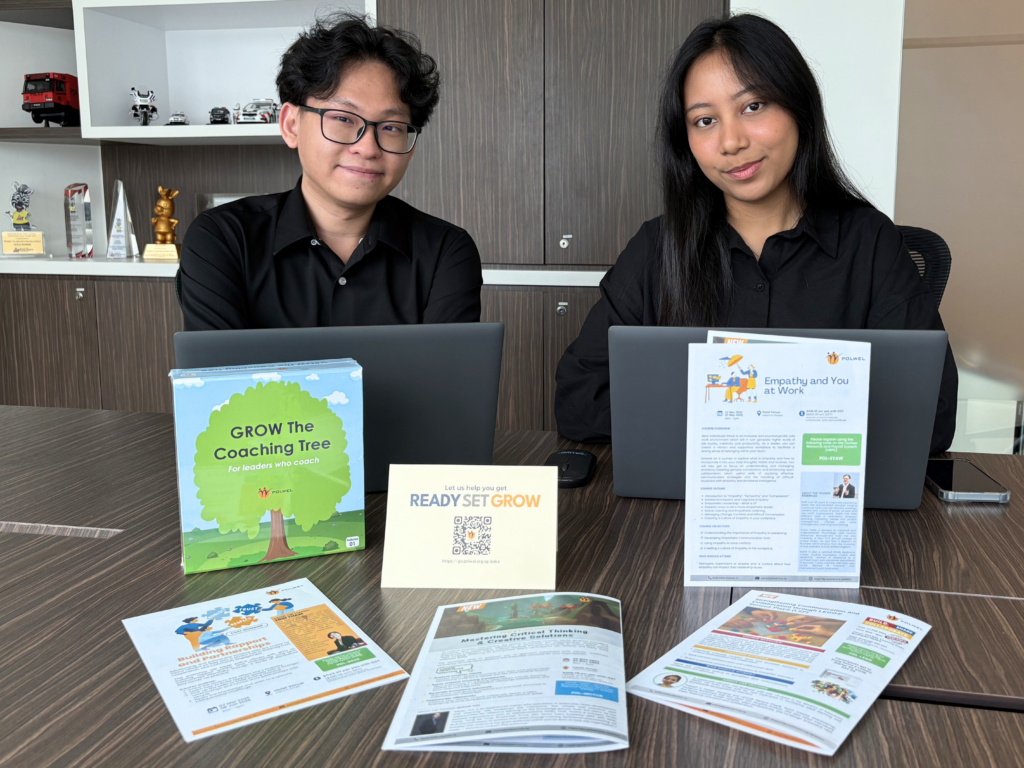
Introducing Syirain Binte Saifi (Executive, Training Services) and Woo Chun Hua (Executive, Capability Development)! Complementing each other in their roles, Syirain handles training services and operations within PDCS, while Chun Hua supports these efforts and focuses on outreach to retiring and retired officers. Let’s find out how they are shaping members’ professional growth!
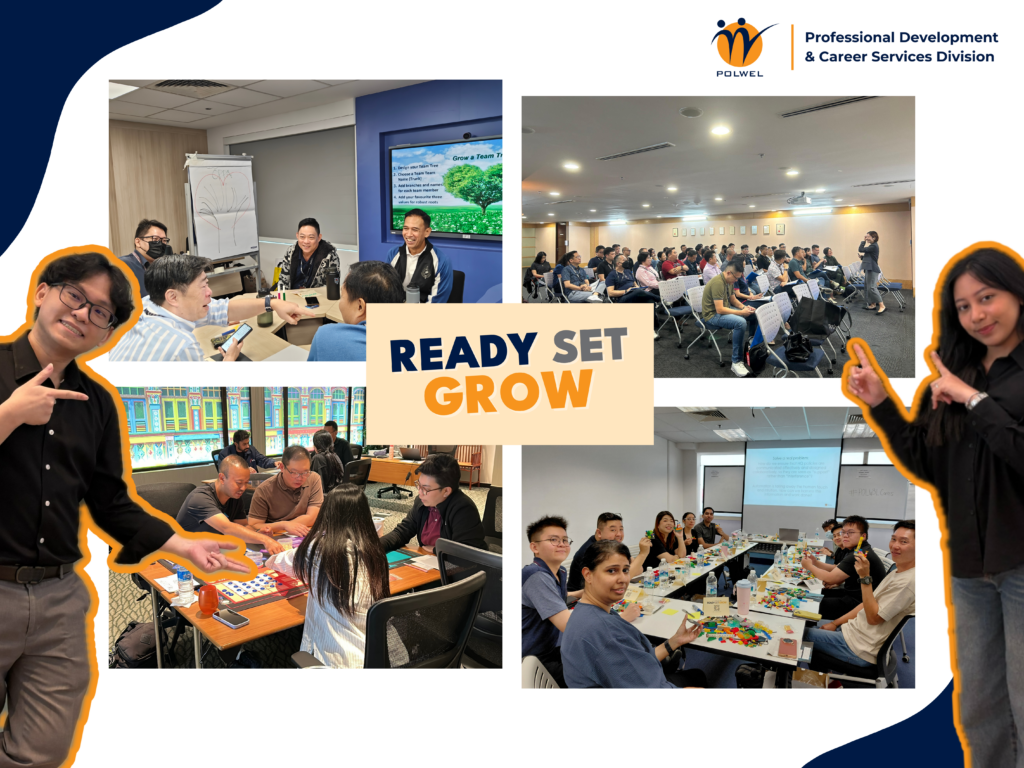 Chun Hua and Syirain work closely with corporate trainers to provide a variety of training courses, such as leadership development, Microsoft Excel skills, and healthy nutrition.
PDCS delivers both training courses and career transition support. How do the two of you work together to support officers holistically?
Syirain and Chun Hua: We work together as one to support the learning needs of individuals from all walks of life, including Home Team officers and employees from external organisations. Our training courses cover a holistic range of competencies, ranging from leadership development to technical skills for various seniorities and job scopes. Most courses are contextualised to the policing environment, incorporating relevant terminology, real case studies and practical discussions while fostering a safe space for mutual learning and sharing.
Beyond training services, we also work closely with SPF’s Career Transition Office (CTO) to assist retiring officers in preparing for the next chapter after retirement, as some may wish to continue working. We provide personalised career transition support through programmes such as workplace attachments and career advisory services. For example, officers can gain hands-on exposure and practical experience during the 3-to-5-day workplace attachment, like observing and conducting of enforcement inspections or security WSQ assessments.
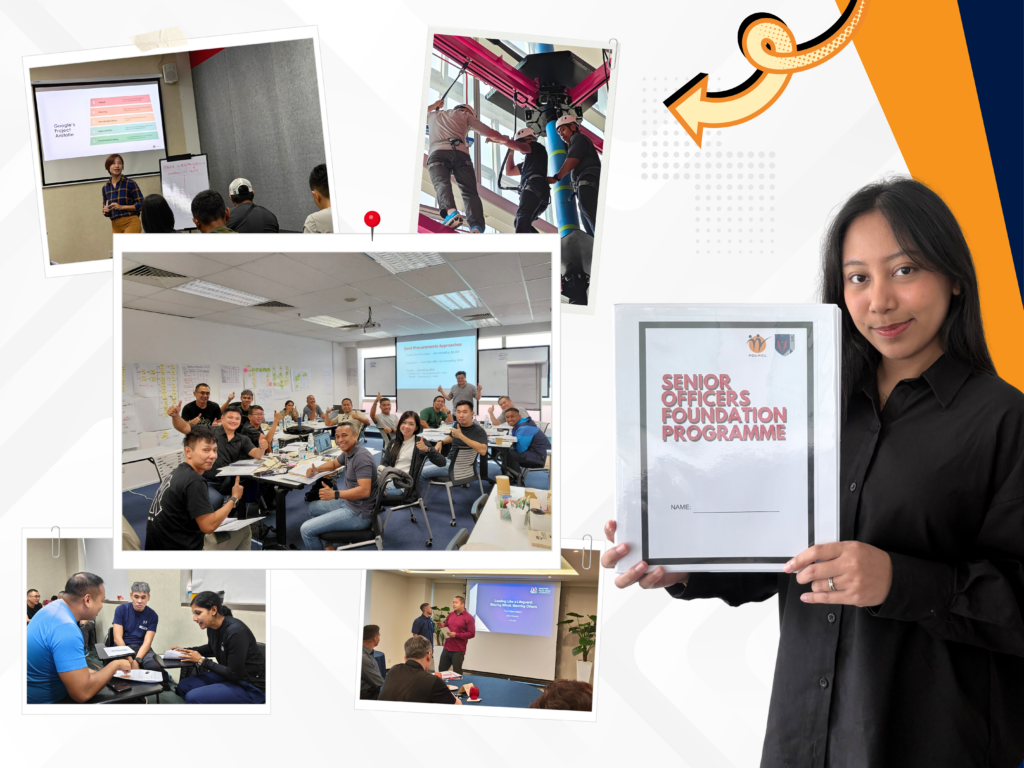 The inaugural Senior Officers Foundation Programme for SPF Special Operations Command (SOC) was successfully delivered in 2025 through contextual tailoring of existing courses relevant to the targeted participants, such as How to Plan a Project Right and Identi3 of an Effective Leader.
What are some common concerns or challenges officers face, and how does PDCS help address them?
Syirain and Chun Hua: Due to the operational nature of policing work, time constraint is one of the most common challenges that officers face. Tight schedules, shift duties and evolving operational demands often make it difficult for them to commit to standard training calendars. So, we have the flexibility of organising dedicated group trainings that align with their operational timelines.
“Ring us up if you face difficulties with meeting your training needs!” Chun Hua quips, making a telephone sign with his fingers.
In some cases, we also tweak existing courses to better fit their operating context or design new programmes to meet specific and unique needs. One example was the inaugural 10-day Senior Officers Foundation Programme (SOFP) tailored for newly appointed senior officers from the Special Operations Command. SOFP was curated to build leadership capabilities through seven core skills modules, complemented by a team-building challenge and a team presentation. It strengthened practical competencies like professional email writing, sharpening conversational skills, data analysis and effective project planning.
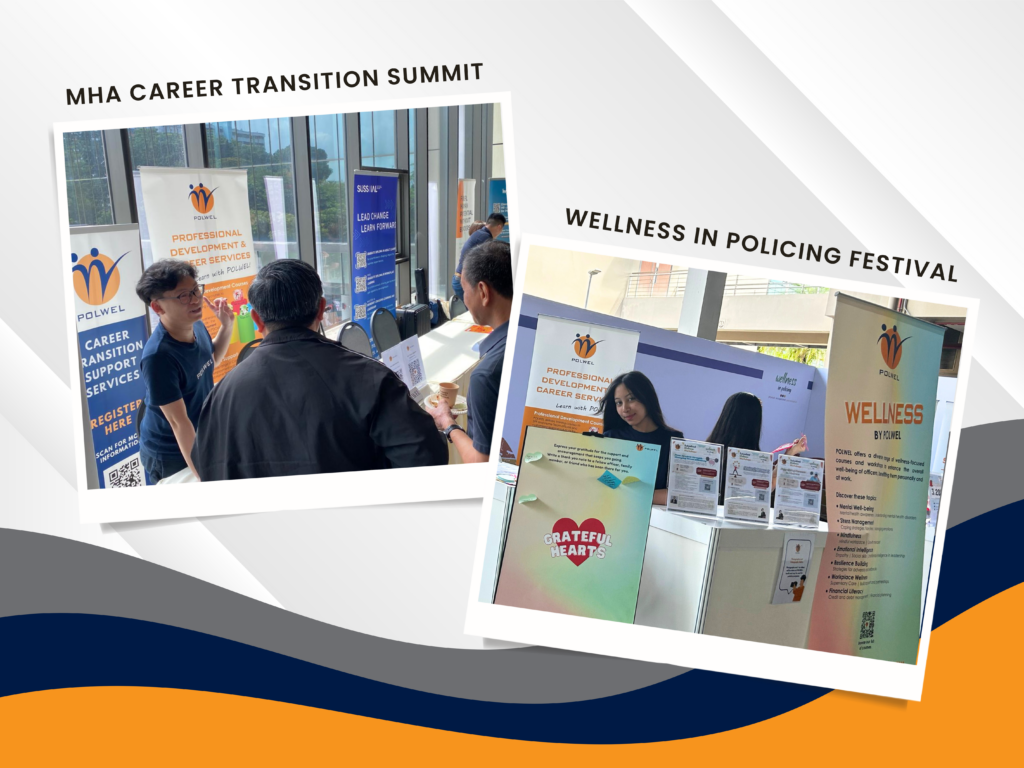 Through outreach engagements, Chun Hua and Syirain showcase the range of courses members can attend and advise on post-retirement opportunities and transition support.
What have you learned from working closely with officers at different stages of their careers?
Syirain: Some would assume that participants of our courses are early to mid-career officers. However, we actually see a strong group of retiring officers who actively seek out our courses and have attended quite a few of them. We have also built a good relationship with them throughout the years.
Chun Hua: Officers at every stage of service have different skills they hope to strengthen and learning gaps they want to bridge. For example, younger or junior officers often focus on improving foundational core skills to perform confidently on the frontline, while mid-career to senior officers look to deepen decision-making capabilities or to acquire new skills beyond their years of experience to prepare for a meaningful and enjoyable second career.
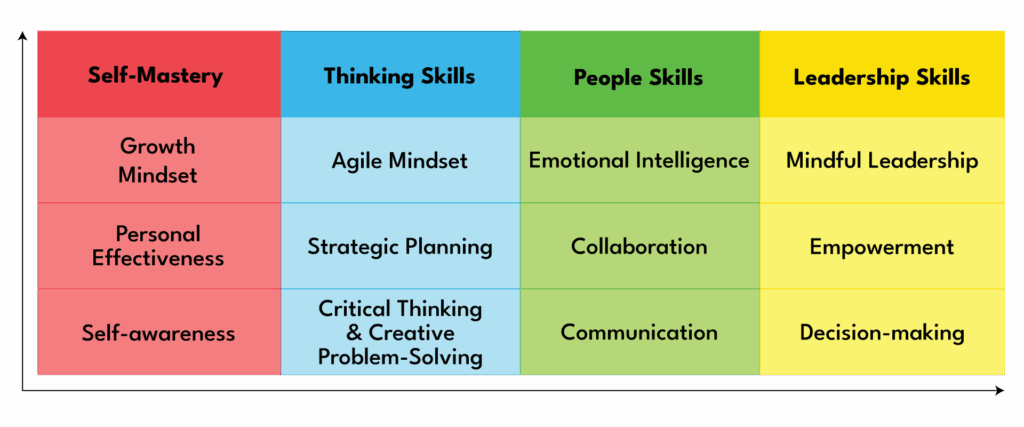
We often encourage officers to use our Professional Development Competency Model (PDCM) as a guide to structure their learning pathways. Rather than viewing progression as a single direction, the PDCM emphasises that learning can be lateral, specialised or multi-directional.
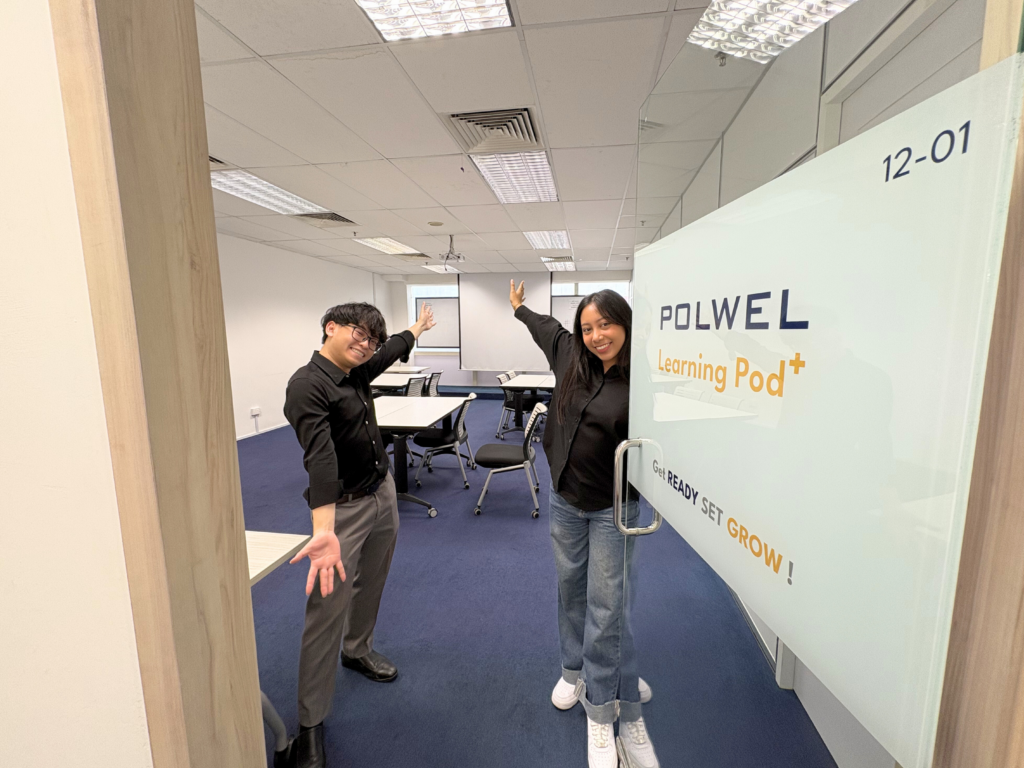 Courses are conducted in a conducive learning environment, just like our own Learning Pod+.
What part of your work energises you the most?
Syirain: When a course run comes together smoothly, it always gives me a strong sense of accomplishment, both for the team’s hard work in planning and coordinating, and for the broader perspectives and meaningful learning experience learners have gained.
Chun Hua: A good mix between desk work and work on the ground, as well as shooting the breeze with my colleagues while working, keeps me engaged and energised! At the same time, it’s incredibly rewarding to see officers gain direction and momentum in navigating retirement.
Last but not least, what is one piece of advice you would like to give to officers?
Syirain: Definitely check out what POLWEL PDCS can offer you! If you would like to broaden your knowledge on certain things, there’s always a good reason to attend courses – and a bonus if it’s held at a hotel venue! (laughs)
Chun Hua: Learn early and learn often! Learning is like planting a tree sapling – if you nurture, care and maintain it, your efforts will be rewarded in the long run!
So, let us help you get Ready, Set, Grow! Take the next step in your professional development. Register for our courses via HRPS or contact us at pdcs@polwel.org.sg.